Niki
A Pale View of HillsNiki is Etsuko’s younger daughter, an adult whose life in London stands at a distance from her mother’s quiet country home and from the family history she only partly remembers. Her brief visit brings Keiko’s death and the sisters’ estrangement into conversation, while Niki’s objections to her father’s neglect and her questions about Etsuko’s choices expose different kinds of grief and responsibility. She is neither simply detached nor reconciled: concern emerges in hesitant admissions, sharp judgments, and the space she keeps for an independent life.
Identity and the Meaning of Her Name
Niki’s name is a compromise between her parents. Her father wanted a Japanese name for their younger daughter, while Etsuko insisted on an English one, perhaps because she did not want to be reminded of the past. The choice was therefore more than a matter of naming: it carried a disagreement about how the child should be connected to Japanese identity and to Etsuko’s earlier life. Her father accepted Niki because he heard in it a vague echo of the East. Etsuko makes clear that Niki is not an abbreviation, but a negotiated choice in its own right.
That compromise gives Niki a position between her parents’ preferences without resolving their difference. Her name holds both the Englishness Etsuko wanted and the suggestion of Japan that satisfied her father. The text does not present this as a conflict Niki herself chose or understands; it is part of the family history attached to her before she can speak for herself. As an adult, she lives in London, and her mother’s account of the name makes visible the tension between inherited identity and a life shaped elsewhere.
Visit to Etsuko and Her Independent Life
Niki visits Etsuko in April, when the days are still cold and drizzly. Her stay lasts five days. The country house and its quiet make her restless, and Etsuko senses that she is eager to return to London. Niki listens impatiently to her mother’s classical records and flicks through magazines. The telephone rings regularly for her; when she crosses the carpet to answer it, she takes care to close the door so Etsuko cannot overhear. These small habits establish both her separation from her mother’s domestic world and her effort to keep parts of her own life private.
The visit is not presented as a straightforward return to intimacy. Niki’s impatience, the calls, and her early departure sit alongside her willingness to raise difficult family matters. Her independence is ordinary and practical rather than announced as a declaration: she has a life elsewhere, wishes to resume it, and does not make the country house her permanent refuge. Etsuko notices this distance, but the visit still gives the two women time to speak about Keiko and about the decisions that shaped their family.
Keiko, Sisterhood, and Grief
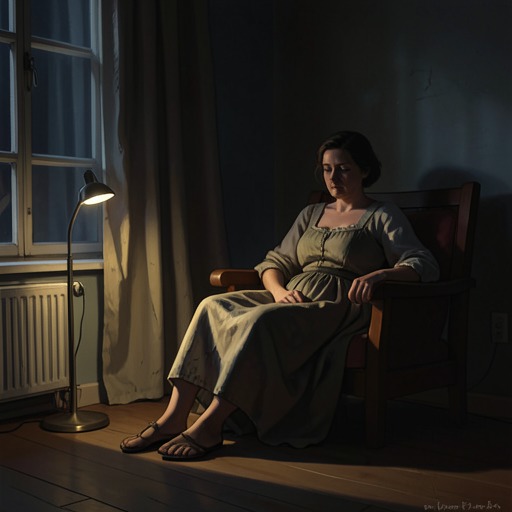
Niki does not mention Keiko until the second day of the visit. In a grey, windy morning, the two women sit by the windows watching rain fall on the garden. Niki asks whether Etsuko expected her to attend the funeral. She says that hearing of Keiko upset her and that she almost came, but explains that she did not tell anyone what she was feeling because she was embarrassed and believed they would not understand. Her difficulty is not an absence of feeling but an inability to make that feeling legible to other people.
Niki measures her relationship with Keiko against the ordinary expectation that sisters should be close, even when they do not particularly like one another. She says that this was not how the relationship worked for them, and that she can no longer remember what Keiko looked like. The admission makes their estrangement painfully concrete: the expected bond between sisters is present as a standard by which Niki judges their actual distance, while even the image of her sister has faded. Her almost-attendance at the funeral and her later words about Keiko show that distance did not prevent grief, though she could not express it openly at the time.
Later, Niki condemns her father for mostly ignoring Keiko and says that this was unfair. Etsuko replies that he was not Keiko’s real father, but Niki repeats that his treatment was unfair. The exchange distinguishes explanation from absolution: the family relation may help explain the distance, but it does not cancel Niki’s judgment of its consequences. Her insistence gives voice to an injury that Etsuko’s account might otherwise leave softened by circumstance.
Responsibility, Autonomy, and the Closing Conversation
In a dark early morning, Etsuko glances toward Keiko’s room after thinking she hears a sound there, only to realize that the noises come from the kitchen. Niki is coming out holding a cup in both hands, dressed in a pale dressing gown. She tells Etsuko that she has been sleeping badly and having bad dreams. When Etsuko asks about them, Niki becomes irritated and refuses to explain their subject. The exchange leaves the dreams unspecified; what follows instead is her judgment about Keiko and the family’s responsibility toward her.
Etsuko tells Niki that her father had once believed they could give Keiko a happy life in England. She then admits that she knew all along that Keiko would not be happy there, but brought her anyway. Niki rejects the idea that Etsuko could have known, tells her she did everything she could, and says she is the last person anyone could blame. Etsuko remains silent. Niki’s defense does not erase the mother’s confession, and the scene offers no settled verdict that makes the past simple. It places Etsuko’s private certainty beside Niki’s refusal to condemn her, while preserving Niki’s earlier insistence that Keiko was treated unfairly.
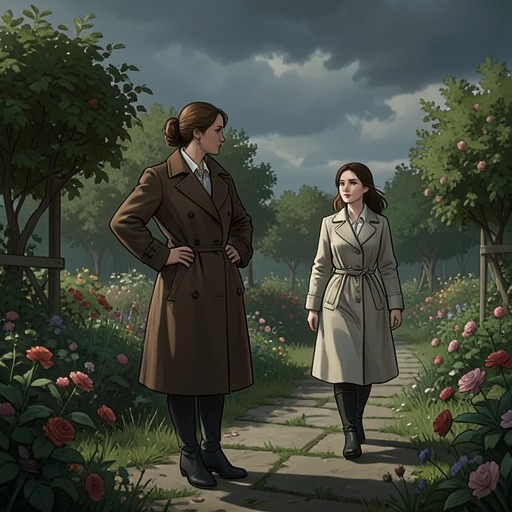
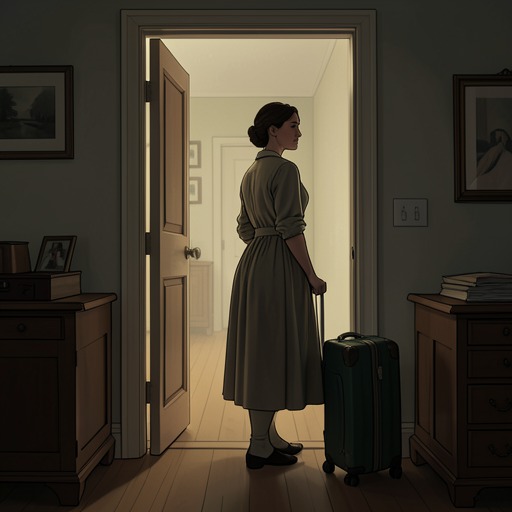
As Niki packs, she struggles to fit three separate pairs of boots into her case. Etsuko asks whether she plans to marry; Niki responds that she sees no reason to. Later, as they walk through marshy ground to the end of an orchard, Niki asks whether her mother dislikes her living away with David. Etsuko tells her she is not ashamed of her and that she must live as she thinks best. The questions bring Niki’s adult choices into the open, but the answers do not turn those choices into a dispute: her mother’s approval is offered without a demand that she return to a conventional path.
Narrative Role
Niki’s role is to ask what Etsuko’s account of the past has left unresolved. She approaches Keiko’s death through her own embarrassment and poor memory, then shifts from mourning the sister she barely knew to judging the adults who failed to care for her. Her words challenge the idea that a family’s intentions or circumstances settle the moral meaning of its actions. At the same time, when Etsuko blames herself for bringing Keiko to England, Niki refuses to treat hindsight as proof that her mother deserves blame.
That contrast makes Niki more than a figure of generational independence. She can be impatient with Etsuko’s surroundings and protective of her privacy, yet emotionally troubled by Keiko’s death and willing to confront the family’s past. The visit ends without resolving either the sisters’ estrangement or Etsuko’s guilt. Niki’s significance lies partly in that unfinished exchange: she offers compassion without retracting her criticism, and asserts her own life without severing her connection to her mother.